Know what every child knows. Know what to teach next.
Replace term-start guesswork with a single-lesson diagnostic picture mapped to small CLIC progression steps.
Used by primary schools across the UK. No pressure, no hard sell.
The 90-second teacher workflow
A class explores paper challenges, each pupil’s starting CLIC level is set, step-level Learning Gaps are revealed, and next week’s lesson plan picks them up with Repeat, Revisit and Mastery resources ready to teach.
Note for Primary Educators: The Big Maths Baseline Assessment is an instructional diagnostic tool designed to inform ongoing classroom teaching across Years 1–6. It is completely separate from the statutory Reception Baseline Assessment (RBA).
From maths baseline assessment to Monday’s lesson in three steps
Single-Lesson Baseline
Assess prior knowledge without creating a multi-day testing burden.
Instant Gap Analysis
See step-level gaps in the Learning Gaps tool, mapped to 1,200+ CLIC steps.
Responsive Planning
Turn diagnostic insight into targeted Monday lesson plans and weekly Beat That! challenges.
Want the detail on how weekly gap analysis works? Read the full guide
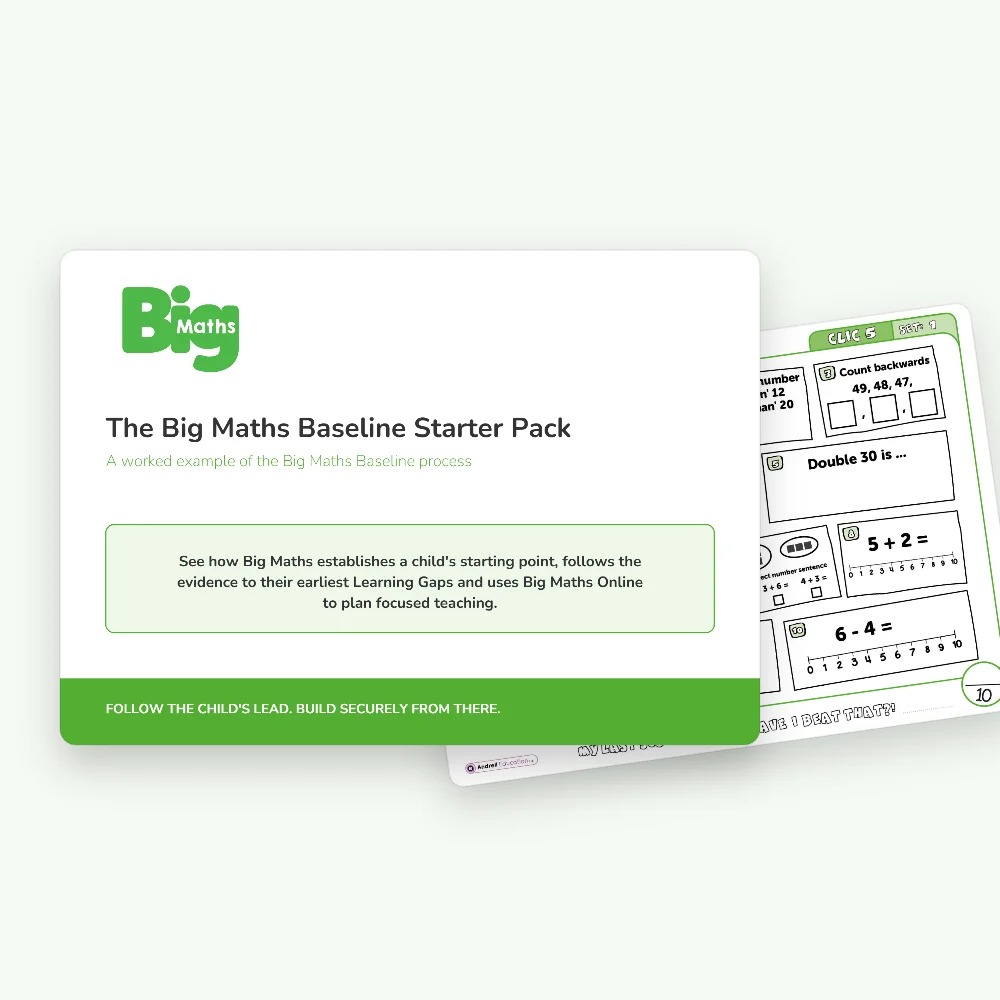
Get “The Big Maths Baseline Starter Pack”
A worked example showing how a Big Maths Baseline Assessment works, with sample sheets and an example intervention set so you can see the method in practice.
- The six-step baseline process, with a worked Year 4 pupil journey from CLIC 9 down to a secure 10/10
- Sample Week 1 Beat That! challenge sheets, CLIC 5 to CLIC 12, to try with one class
- An example intervention set for one Learning Gap: Repeat, Revisit, Real Life Maths and Mastery, with answers
- A one-page checklist of the steps a full baseline follows
What it is: a sample of the method. What it isn’t: a complete baseline for your class or school. That needs the full paper process plus Big Maths Online, covering Years 1 to 6.
Send me the Starter Pack
Takes 20 seconds. You’ll go straight to your download.
No waiting on an email. The pack opens on the next page. We only use your details to send Big Maths updates if you say yes. See our privacy policy.What the maths baseline assessment shows you
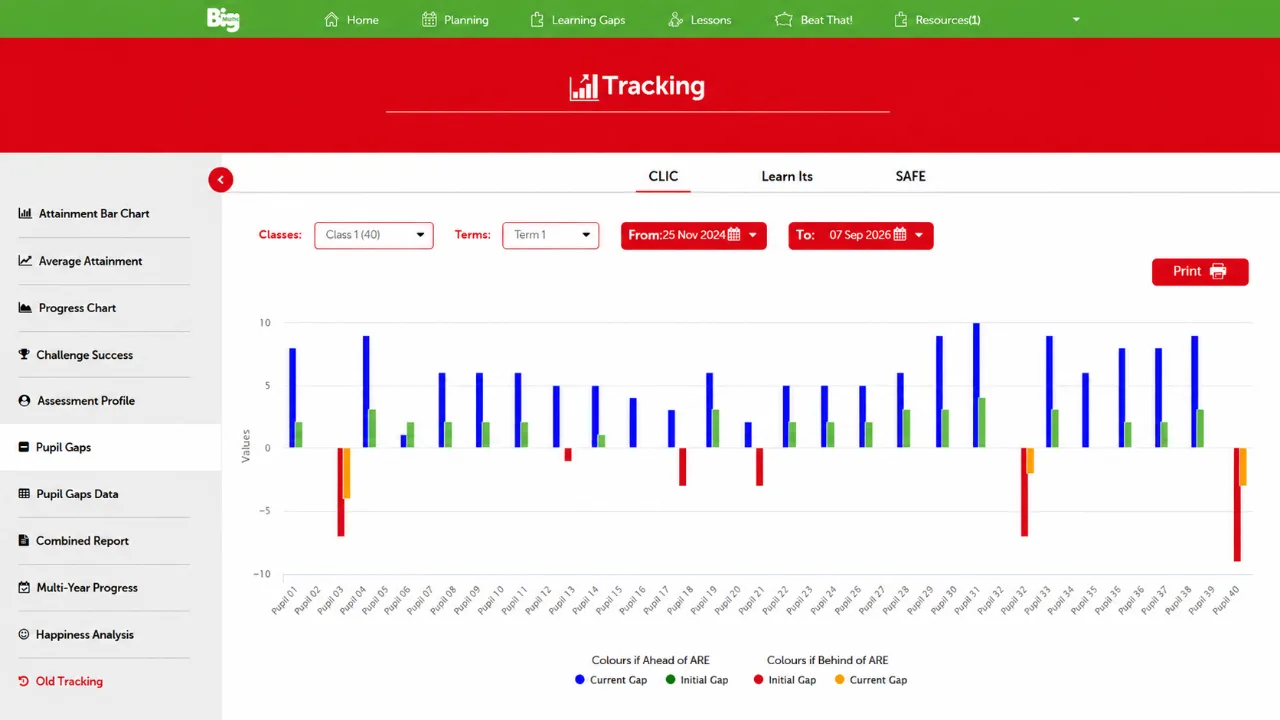
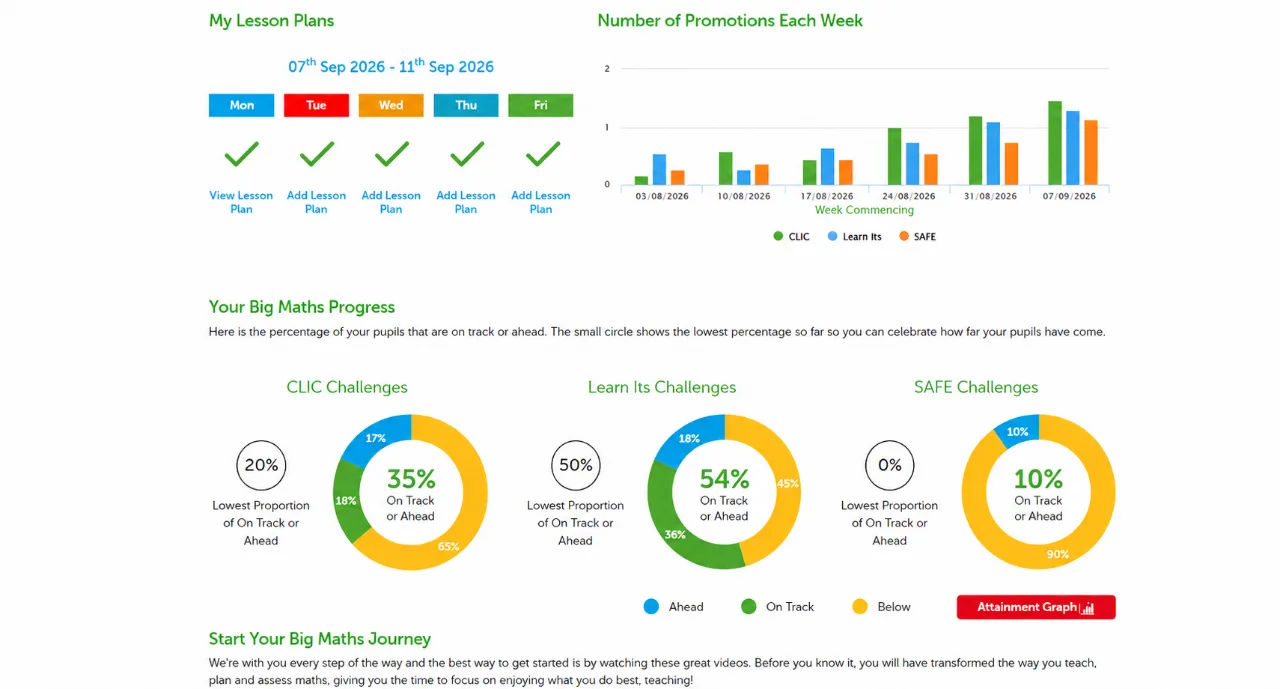
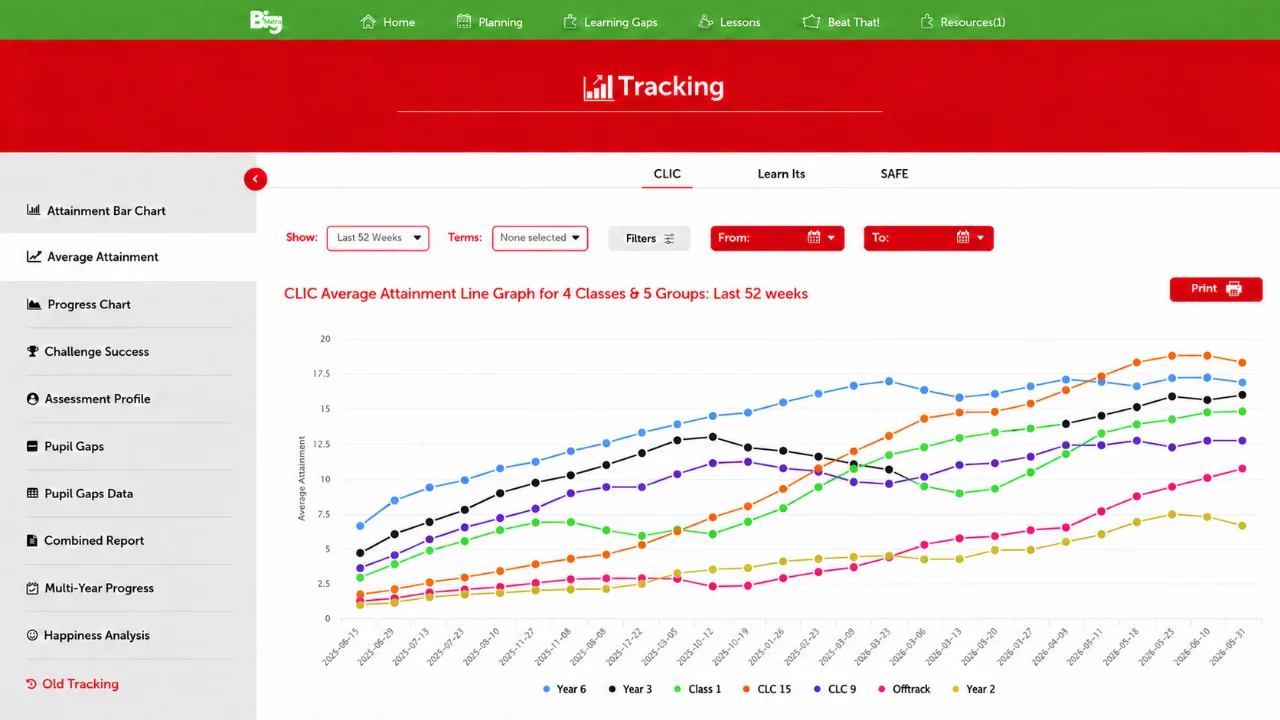
Real screens from Big Maths Online: the diagnostic picture teachers use every week.
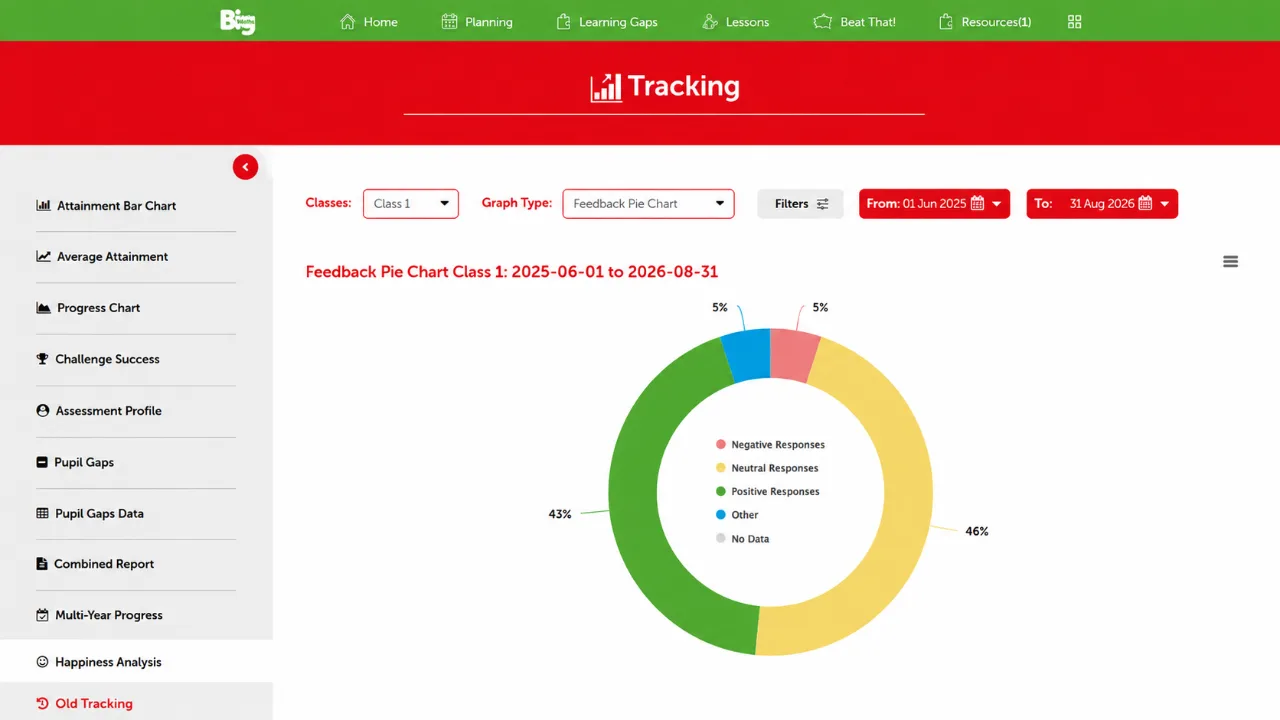
Built for practical classroom impact.
Schools using Big Maths describe a shared, step-by-step picture of what each child knows, and what to teach next.
“Children know exactly what they are working towards, and teachers have a shared understanding of progression.”Maths Lead, Rockmount Primary School, South London
“Groupings are flexible, responsive to individual progress, and ensure that all learners are appropriately supported and challenged.”Emma Anstee, Headteacher, Treorchy Primary School, Rhondda Cynon Taf
Case studies demonstrate real school implementation journeys. Attainment outcomes depend on broader leadership and teaching context; Big Maths does not claim sole causation.
Maths baseline assessment: questions teachers ask us
Is this just another data-entry exercise?
No. Results are auto-analysed to inform weekly teaching choices, not to populate static administrative spreadsheets.
Does this replace professional teacher judgement?
No. It provides a clear diagnostic starting point to support and inform your professional teaching decisions.
What if we missed the first week of September?
It is never too late. Diagnostic checks can be established at the start of any term, half-term, or intervention period.
Start the year knowing where every child is.
Book a relaxed tour of Big Maths, or a 30-minute chat about your setting. No pressure, no hard sell.